
The Hidden Epidemic: Why America's Sleep Care System Is Failing Millions of Patients
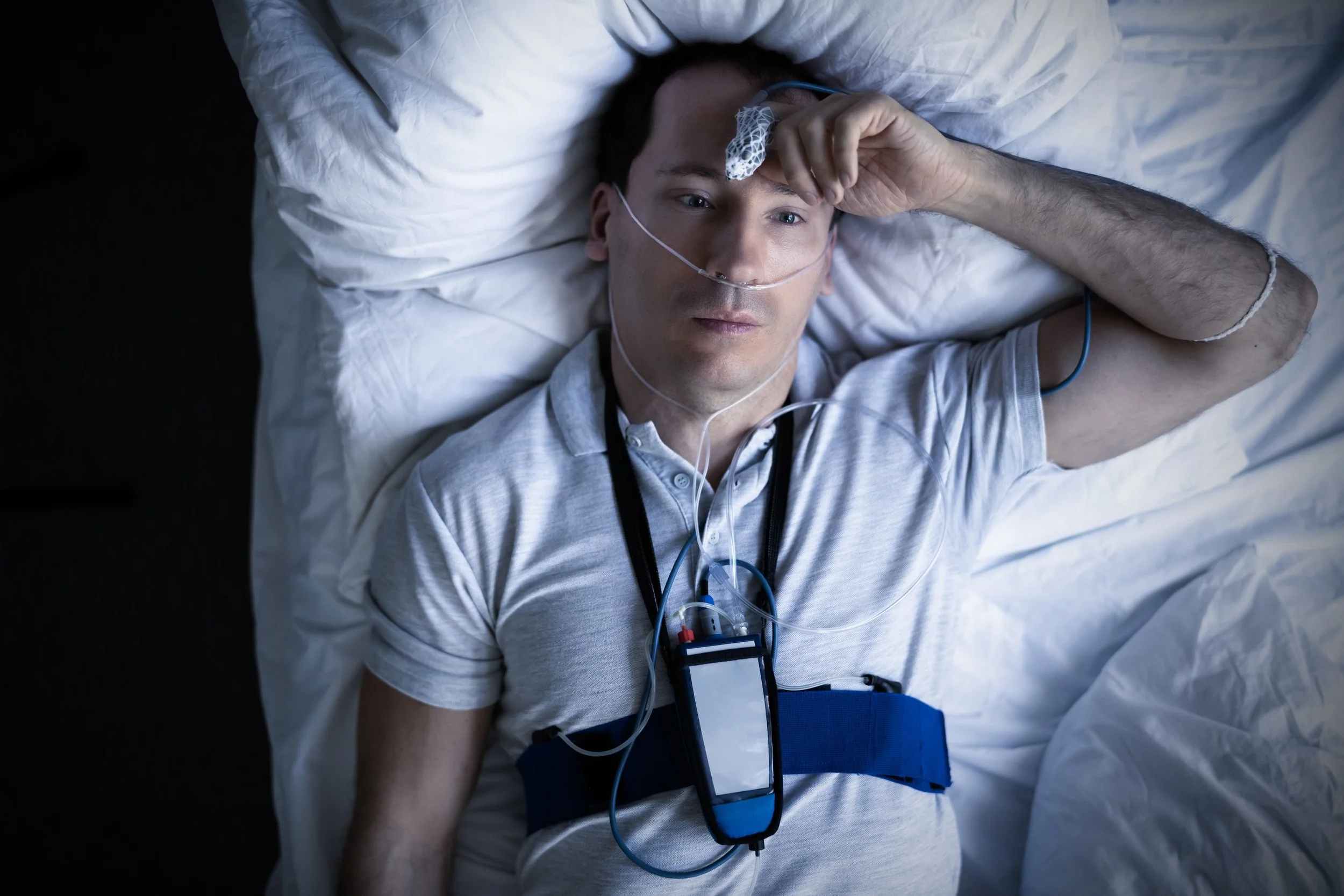
Imagine visiting your primary care physician with a complaint you've had for years — chronic fatigue, morning headaches, difficulty concentrating, a partner who can't sleep because of your snoring. You leave with a referral. That referral sits in a queue. Weeks pass. The specialist's office calls to schedule a sleep study — but the next available appointment is three months out. You attend the study. The results go to a physician who may or may not communicate them back to your PCP. A DME supplier gets looped in for your CPAP machine, then hands you a device and a pamphlet. Follow-up? Largely nonexistent.
This is not a worst-case scenario. For tens of millions of Americans, this is just the sleep care experience.
A Crisis Hidden in Plain Sight
Sleep disorders affect an estimated 50 to 70 million adults in the United States. Obstructive sleep apnea (OSA) alone — the most common sleep-related breathing disorder — impacts more than 50 million Americans, yet up to 80–90% of cases remain undiagnosed. That's tens of millions of people walking through their days impaired, their bodies under chronic physiological stress, their risks for cardiovascular disease, diabetes, cognitive decline, and motor vehicle accidents quietly compounding with every passing year. [1]
The problem is not simply that people are unaware of their condition. The problem is structural. The system designed to diagnose and treat sleep disorders is, by its own design, fragmented. It is a patchwork of disconnected stakeholders — primary care physicians, pulmonologists, sleep specialists, home sleep testing companies, DME suppliers, and insurers — each managing their own slice of the patient's journey, rarely if ever communicating in real time.
The Referral Maze
The path from symptom to treatment in sleep medicine looks more like a relay race where each runner drops the baton than a coordinated sprint toward health.
It typically begins at the primary care level, where a fatigued patient describes symptoms that could easily be attributed to any number of conditions. Sleep apnea screening is inconsistent; OSA is frequently missed or deprioritized in the primary care setting. When a referral is eventually generated, research shows that once OSA-related features are apparent to a clinician, the average time to referral for diagnostic sleep testing is 7.9 months. [2] And that's after someone is already in the system. Other studies have found the average time between the onset of OSA symptoms and a referral to a sleep center can stretch to 87.5 months — more than seven years. [3]
Seven years of disrupted sleep. Seven years of downstream health consequences. Seven years of eroded quality of life — all while the diagnosis was available and the treatment was effective.
Once a referral is made, there is no guarantee it reaches its destination. Lost referrals are a widely recognized failure point in sleep medicine. Sleep centers may receive fax-based orders with incomplete information. Patients fall out of the funnel before ever booking their study. And when they do complete testing, the results must travel back through a system with no standard communication infrastructure to ensure the right people receive them at the right time.
A System of Silos
The structural issue at the core of sleep medicine's dysfunction is the absence of interoperability. The stakeholders involved in a patient's sleep care journey — physicians, sleep labs, testing technologists, interpreting physicians, DME providers, and payers — operate in silos. Each has their own workflow, their own documentation system, and their own definition of "done."
A primary care physician who writes a sleep referral has no visibility into whether that referral was received, scheduled, completed, or acted upon. A DME supplier who delivers a CPAP machine has no automatic feedback loop to the treating physician about whether the patient is using the device. A sleep lab that conducts a polysomnography study may produce a report that never finds its way back to the patient's longitudinal care record.
In most industries, this level of disconnection would be considered an operational failure. In sleep medicine, it has been normalized for decades.
What This Dysfunction Actually Costs
The downstream costs of this fragmented, delay-prone system are staggering — and they fall on everyone: patients, payers, employers, and the health system at large.
Sleep disorders are conservatively associated with an additional $94.9 billion in annual U.S. healthcare costs, according to a study published in the Journal of Clinical Sleep Medicine. [^4] But that figure only captures direct medical expenditures. When indirect costs are factored in — workplace accidents, lost productivity, absenteeism, impaired driving — the economic toll may exceed $1 trillion annually. [5]
For obstructive sleep apnea specifically, the American Academy of Sleep Medicine estimates the economic burden of undiagnosed OSA alone is nearly $150 billion per year in the United States. [6] Untreated OSA patients generate 2.5 times higher healthcare costs than their non-OSA counterparts — not because sleep apnea is expensive to treat, but because untreated, it fuels a cascade of comorbidities: hypertension, atrial fibrillation, type 2 diabetes, stroke, and depression, all of which require their own expensive interventions. [6]
Adults with sleep disorders, compared to those without, have nearly double the mean number of annual office visits (16.3 vs. 8.7), significantly more emergency department visits, and nearly twice the number of prescriptions. [7] These are not patients who aren't engaging with the healthcare system — they are patients who are overusing it because their underlying condition was never properly identified and treated.
The Human Cost Behind the Numbers
Statistics describe a problem at scale. But the real cost of sleep medicine's broken pathway is paid one patient at a time.
It's the 45-year-old truck driver who spent years fighting exhaustion, attributing it to stress and aging, before a near-miss accident on the highway prompted his wife to demand he see a doctor. His OSA diagnosis, when it finally came, had been hiding in plain sight for nearly a decade.
It's the 38-year-old mother whose insomnia has been treated with a revolving door of sleep aids, while the underlying circadian rhythm disorder driving her symptoms went unexamined for years.
It's the cardiac patient whose physician ordered a sleep study after his third hospital admission for heart failure — a study that revealed severe OSA that had been silently straining his cardiovascular system throughout.
These are not rare stories. They are the predictable output of a system that was never designed to move patients efficiently from symptom identification to sustained, effective treatment.
The Path Forward
The good news is that sleep disorders, when properly diagnosed and treated, respond well. PAP therapy for OSA, when adherence is supported through coordinated care, achieves adherence rates of over 82% at one year in integrated care models — a marked improvement over the 30–60% adherence rates seen in traditional, fragmented delivery. [8]
The challenge is not a lack of effective treatments. The challenge is building a system capable of reliably connecting patients to those treatments without years of delay, lost referrals, and siloed handoffs.
That requires a fundamentally different approach to how sleep care is organized — one that treats the care journey as a continuous, connected workflow rather than a series of isolated transactions. It requires platforms capable of linking every stakeholder in real time, eliminating the information gaps that allow patients to fall through the cracks, and ensuring that from the moment a sleep concern is identified, no step in the diagnostic and treatment pathway is left to chance.
The fragmented sleep care system is not inevitable. It is a design problem — and design problems have solutions.
In our next post in this series, we'll explore exactly how those solutions are being built.
________________________________________________________________________________
Sources
[1]: Frost & Sullivan / SleepNavigator funding release, 2026. Nearly 80% of Americans with sleep apnea remain undiagnosed or untreated.
[2]: Sleep and Breathing, Springer Nature. "Delayed Diagnosis of Obstructive Sleep Apnea." Average time to referral once OSA features apparent: 7.9 months.
[3]: PMC / Factors influencing patient delay in individuals with obstructive sleep apnoea (PMC9586697). Median total delay of 26 months; other studies cite symptom-to-referral gaps of 87.5 months.
[4]: Journal of Clinical Sleep Medicine / Mass Eye and Ear. "Sleep Disorders Tally $94.9 Billion in Health Care Costs Each Year." (2021). https://www.masseyeandear.org/news/press-releases/2021/05/sleep-disorders-tally-94-billion-in-health-care-costs-each-year
[5]: NCBI Bookshelf. "Functional and Economic Impact of Sleep Loss and Sleep-Related Disorders." https://www.ncbi.nlm.nih.gov/books/NBK19958/
[6]: American Academy of Sleep Medicine. "Economic Burden of Undiagnosed Sleep Apnea in U.S. is Nearly $150B." https://aasm.org/economic-burden-of-undiagnosed-sleep-apnea-in-u-s-is-nearly-150b-per-year/
[7]: PMC / Journal of Clinical Sleep Medicine. "Incremental Health Care Utilization and Expenditures for Sleep Disorders in the United States." (PMC8494101). https://pmc.ncbi.nlm.nih.gov/articles/PMC8494101/
[8]: PMC. Integrated sleep care program outcomes. PAP adherence rates of 82.6% at 1 year in cohesive vs. fragmented care models.
